
“6 - 7” ~ every adult attempting to ruin 6-7
Much has been written about the pessimism Americans have towards our country. The lack of confidence in both our private and public institutions has resulted in American pride reaching 20-year lows.
From someone who trendily used cynicism before it was cool, it should not be lost that the beauty of our nation is that both a positive and negative truth can exist from the same fact. For example, it is both a truth that:
We live in a time with the second lowest poverty rate in the US since it started to be measured in 1959, which is really good progress.
36 million people living in the USA are below the poverty line, which is unacceptable for the richest nation on earth.
New Yorkers want and deserve more, always
This feeling of wanting more is no more acted upon than in NYC. My fellow electorate can turn on our politicians more quickly than a promising Mets season in July1. Ask Eric Adams. Ask Bill de Blasio. Ask Rudy Giuliani. It has only been eight months since Mamdani won with 50.9% of the vote.
It might not seem like a slight majority with the good times generated by the Knicks, the World Cup, and the summer weather. At some point New Yorkers will be asking “are things actually better?” We are not a patient crew.
Despite the vibes being vibey, Mamdani has had a mixed bag of accomplishing major election initiatives. He has accomplished some of his major stated goals (e.g. securing state funding for one year of child care, removing many antisemitic protections, freezing rent for rent stabilized apartments) and left some others unresolved (e.g. free buses, anything involving taxes and the rich).
One of the more controversial initiatives advanced further while I was away on vacation last spring. He announced the second of his city-owned grocery stores, scheduled to be opened in Hunts Point in 2027. This comes a month after his first announced location in East Harlem.
Some see this as Robin Hoodian. These stores will allow residents in “food deserts2” the opportunity to purchase produce at prices controlled by the city, replicating the success of small people-owned food co-ops.
Some will see this as the “uh-oh” jumping-the-shark moment. Those remembering the USSR’s neglect of basic micro- and macroeconomic principles in their own staging of government-controlled grocery markets are reminded of product shortages, long lines, and mass hunger.
There is a stark difference in these outcomes, so what can we expect here in the City?
This opinion is up to you. It will take time before we have any proof one way or another. I can help by creating a framework built upon basic economic principles and assumptions. Whatever side your gut says right now might not be as clear when you analyze it, so let’s dive in.
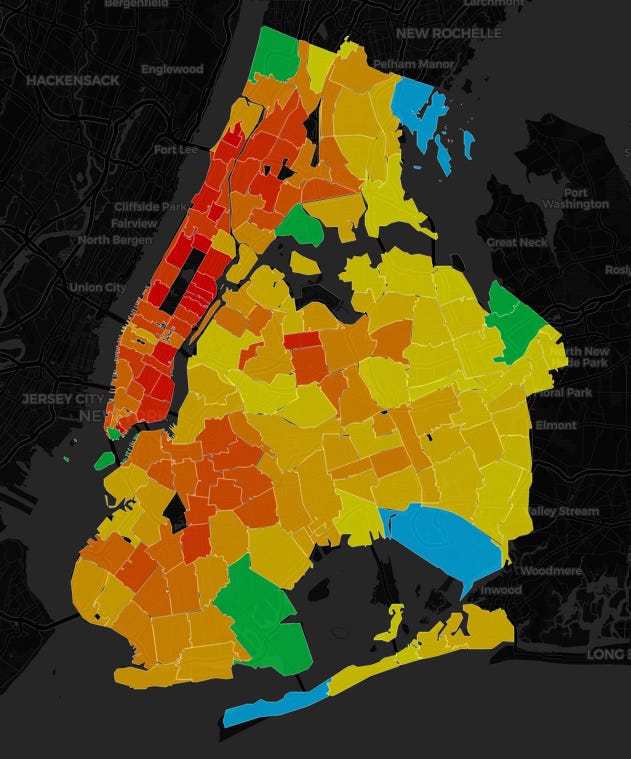
These grocery stores belong only in areas with a high demand.
I said I will cover “basics,” and you can’t get any more basic than “put a store where there are people who would want groceries.” We live in New York City, the most densely population city in the country. I think it is fair to assume that groceries are universally demanded almost everywhere.
The only areas where there is no obvious demand are on major highways, the middle of parks, and storage yards. Even those you might argue have enough foot traffic to generate more demand than a small upstate town.
Although obvious, it is my duty to note that in areas of low demand, a grocery store might be seen as a waste of government spending. Bad.
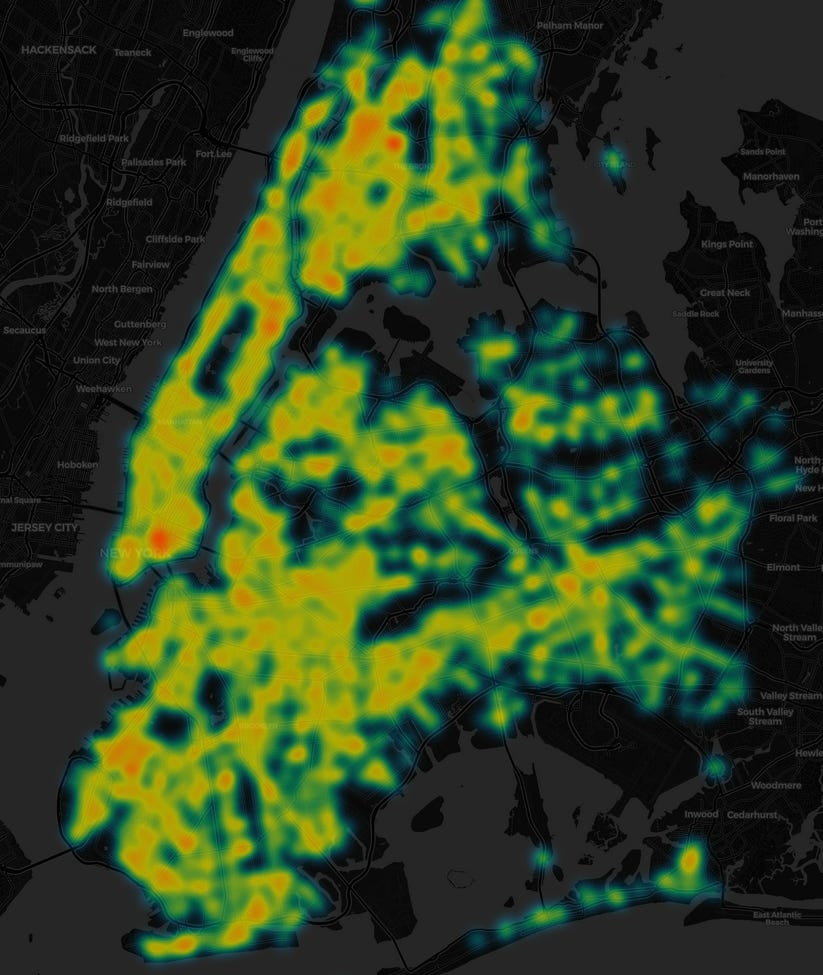
These grocery stores belong only in areas with a low supply.
Government grocery stores play by different rules than private grocery stores, and pitting them against each other is likely bad for the local economy long term. Government-owned grocery stores can undercut prices without undercutting costs (at least in the short term), putting them at a clear competitive advantage over privately owned grocery stores.
Considering that only 22% of grocery stores are owned by white owners, this plan, as liberal writer Noah Smith notes, “would just put a bunch of independent minority-owned and immigrant-owned stores out of business.” Even the highly progressive New Republic mentions that “studies have repeatedly shown that, in American cities in general, distance to a grocer isn’t the biggest determinant of what people eat or health outcomes.”
The worst possible outcome is their eventual evolution into a de facto monopoly without the motivation of efficiency. Basically, translate those phone calls you have had with Con Ed or Spectrum Internet into a grocery store business. Since the store will be less impacted by the market forces that influence a private business, it will be slower to adjust. If this happens and all private institutions in the area are gone, then the people initially helped by these grocers are the ones most hurt by both a worse product and higher taxes to pay for it to exist.
Quick Interlude.
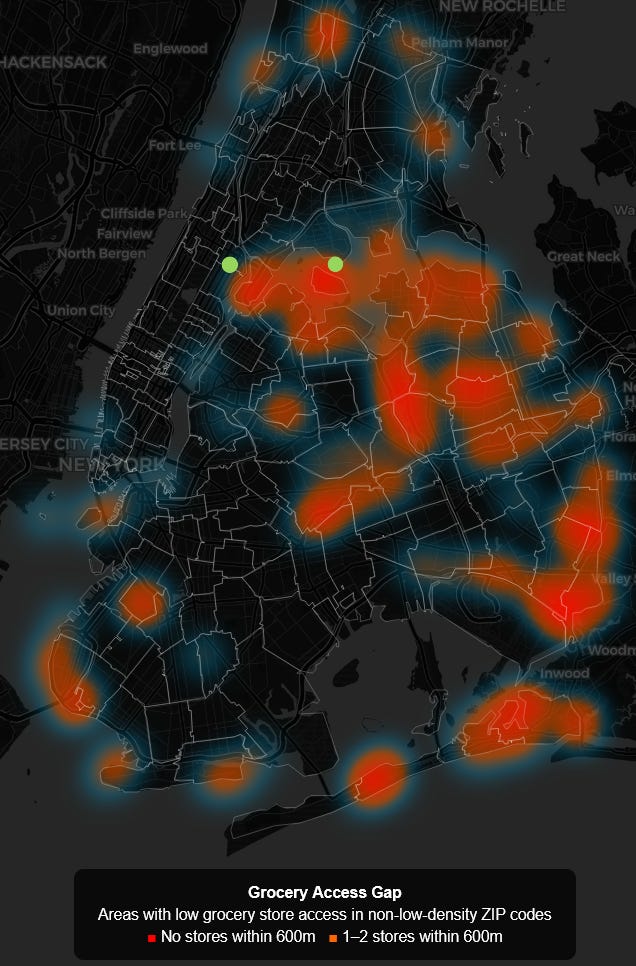
You can already see a paradox which may not make sense: Why would there exist places of high demand and low supply?
One might argue it is an affordability issue. Jan Dutkiewicz and Gabriel Rosenberg further wrote in the New Republic, “Price and preference determined diets much more than proximity did, and many consumers opted to travel further if it meant cheaper food. Or, in Mamdani’s terminology, it’s affordability that’s the core problem. Moving the grocery stores—or poor people, for that matter—doesn’t put money in pockets to buy dinner.”
But they also wrote that “massive economies of scale nevertheless allow grocery giants to offer most consumers the best prices for their preferred products—even factoring in corporate greed and food price inflation.” Basically, big business finds a way to exist in areas of high poverty because there is always a high demand for food, especially in a population-dense New York City.
This means there is likely a “cost” issue preventing a private institution from providing affordable goods.
This is the real problem which the Mamdani administration needs to solve.
In the press release, the administration blames real estate costs. This is a relatively easy solve for a government. It is why tax credits exist, which would be cheaper and more beneficial to neighborhoods in need. This is why it is likely not a real estate cost issue.
So is it an overhead cost thing? Is there proper space? What about secondary costs like insurance or security? Is it too much government red tape or zoning? Or is there something social or structural about the area? That is what we are hoping the administration is actually solving.
These stores need to be a temporary fix, not a permanent one.
Regardless of whether you like or dislike this policy initially, 1.4 million New Yorkers experience food insecurity according to City Harvest. Current jobs are not cutting it either. 2-in-3 New Yorkers who visit food pantries are employed.
Having available and cheap produce will likely be popular no matter where the store is located. As the cliche goes, these grocery stores are a band-aid for the symptoms, not a cure for the disease. Solving for a long-term fix requires complex problem-solving, creativity, and time. Saying otherwise is lying.
Over time, they could become a chronic problem. It could take a few years (see Kansas City) or it could take a few decades, but the longer the real issue remains unresolved, the more difficult it will be to resolve. That will be a detriment to these neighborhoods and to our city.
Now it is up to you.
It is less a matter of whether you think these stores are a good idea or bad idea Rather, you should be asking: does the government thinks of these grocery stores as a band-aid or the permanent solution?
You don't need to form your opinion now, but it's critical you have an educated one by the time the next city-wide election comes. This is the type of topic that could carry huge economic ramifications, ones elected candidates will have to defend, and it's up to you to judge that defense. You might be surprised that your gut today is wrong tomorrow, whether you think this is utopic or dystopic idea.
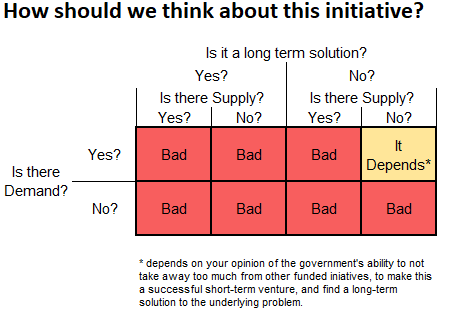
This is not be the last we will hear about this. Regardless of whether a real long-term solution is presented, this will be a victory march for the 2029 re-election campaign as these stores will just be opening and the potential damage will likely not set in yet. With a real long-term plan, this might serve as a successful model for other cities. Without regard for long-term detriment, it is far from a victory.
Until next time,
Adam from 2xParked
Usually a very bad time for Mets fans.
The government does not define these areas as food desert: https://www.ers.usda.gov/data-products/food-access-research-atlas/go-to-the-atlas